

Publication date: March 28, 2022
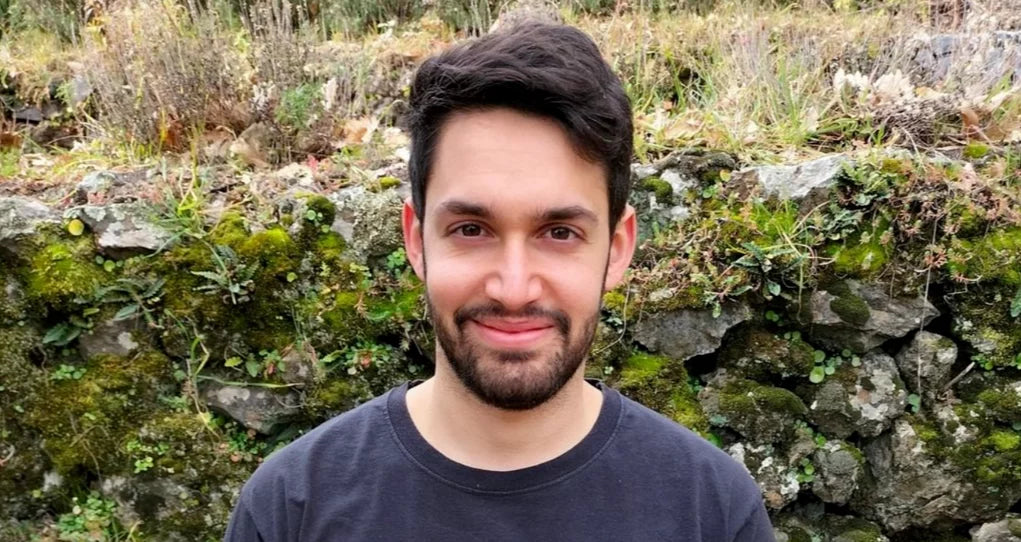
On the slopes of the volcano, which has marked the rhythm of the countryside for centuries, Roberto Carbone preserves a precious biodiversity heritage with his young and courageous agricultural project: SARI.
It’s Sunday afternoon, and Roberto Carbone is busy preparing an important order: nearly 2,000 jars of spices, herbs, teas, and fragrant, colorful aromatic blends destined for one of Milan’s most famous brands. “I’m going through an intense moment; I’m very happy. Just four years ago, I was at a crossroads: leave Sicily to work in the north or stay in my land. I chose to stay here and make my dream come true: SARI.”
Roberto’s entrepreneurial project took shape in 2018 during his university studies in food science and technology. “I had no money or a square meter of land, but I had the essential ingredient: my parents’ unconditional trust. For my birthday, they gave me 3,500 square meters of farmland on the slopes of Etna. Thanks to its unique location, between the volcano and the sea, and its natural terraces, it’s much more than farmland: it’s my open-air laboratory.”
In the heart of Etna National Park, where the volcano has irrigated its black slopes with minerals for centuries, Roberto decided to stand out with a countercurrent project: cultivating medicinal plants, herbs, and spices. “Here I preserve a biodiversity heritage that intensive farming puts at risk, I create educational paths to help young people discover plants and their benefits and understand all the work behind a jar of oregano.”
The idea is right, volumes are growing, and in 2020, Roberto realized it was time to open a small laboratory. “I bought a dryer and the necessary tools to create teas, infusions, and other derived products. Then I met Boniviri, with whom I share the same vision of agriculture and sustainability values. Since then, growth has been unstoppable; I had to take on management of another piece of land.”
Roberto explains that his project is inherently sustainable. “All my plants are low water consumption and don’t require fertilizers. Not only that: as recent research has shown, with their unique scents and colors, they positively influence mood and, because of their beneficial effects, are highly sought after to decorate green spaces in hospitals and healthcare facilities.”
I imagine Roberto in his small laboratory in Trecastagni, in the province of Catania, studying his aromatic herbs, drying them, skillfully mixing them with a generous dose of creativity. His Sunday is still long; we have to say goodbye. Before parting, I want to satisfy my curiosity: how did the name SARI come about? “I was inspired by a document written by Tommaso Fazello, a Dominican friar and spy for Emperor Charles V who lived in the 16th century, author of the first book on the history of Sicily. Like all foreigners arriving in Catania, he was struck by the beauty of Etna and its lunar landscape characterized by large black stones, which in the old Catanese dialect were called SARI. If you think about it, these stones are a simple yet extraordinary element: when they crumble, their mineral-rich dust nourishes the plants and gives the soil unique properties.”
The day fades, and I remain in my office thinking about our phone call. It’s exactly like that: staying is almost always the hardest journey, but also the most exciting. “To leave or to stay” is Roberto’s crossroads, but also our greatest challenge. Staying means not betraying your dream, pursuing it, and doing everything to make it come true. Staying means sharing with loved ones the fullest joys and the most painful falls that, like Etna’s black sari stones when they break, nourish our daily goals.
Yes, staying is our true heroic measure.