
Sicilian Ancient Grain Pasta
7 products
Sort by:
7 products
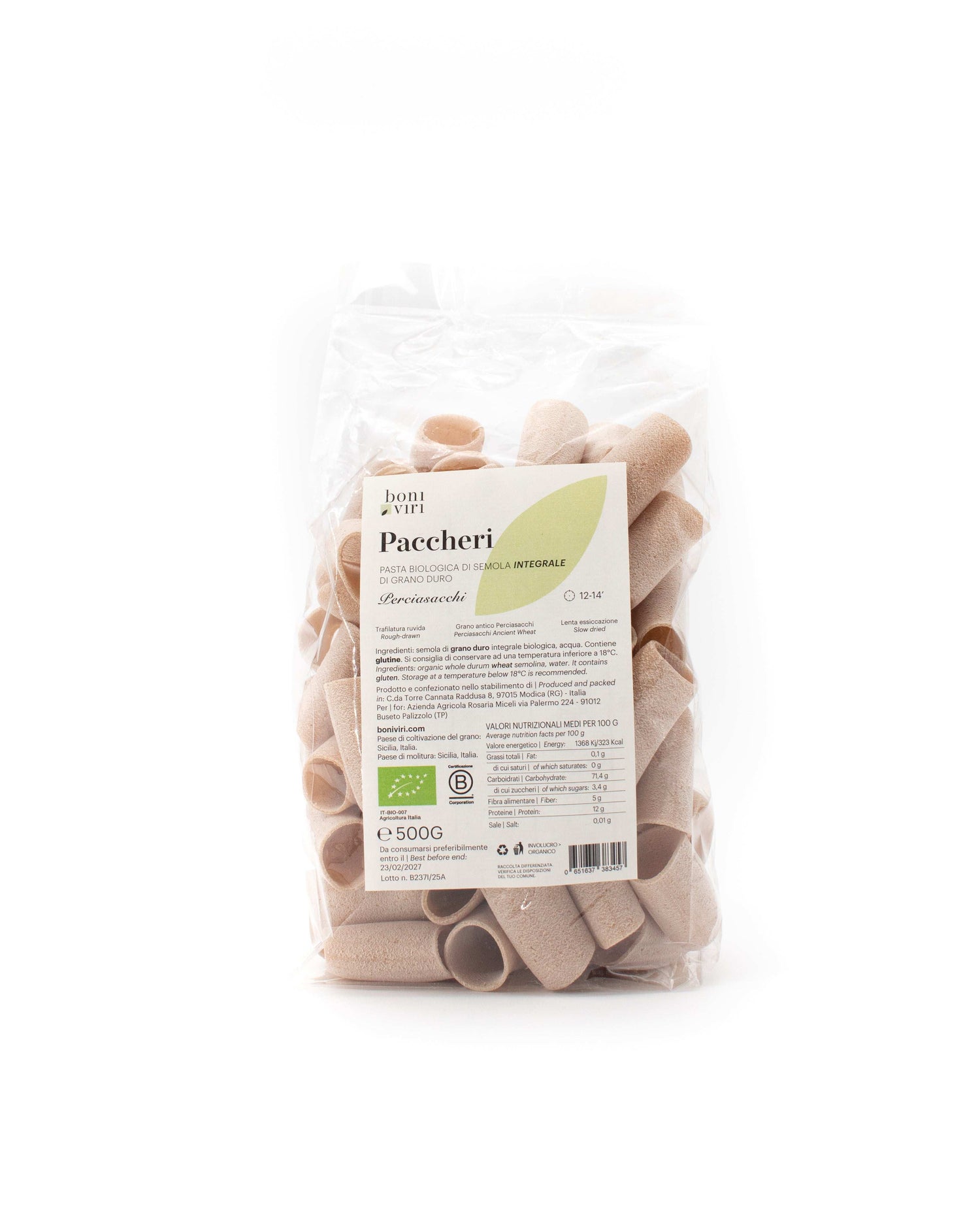
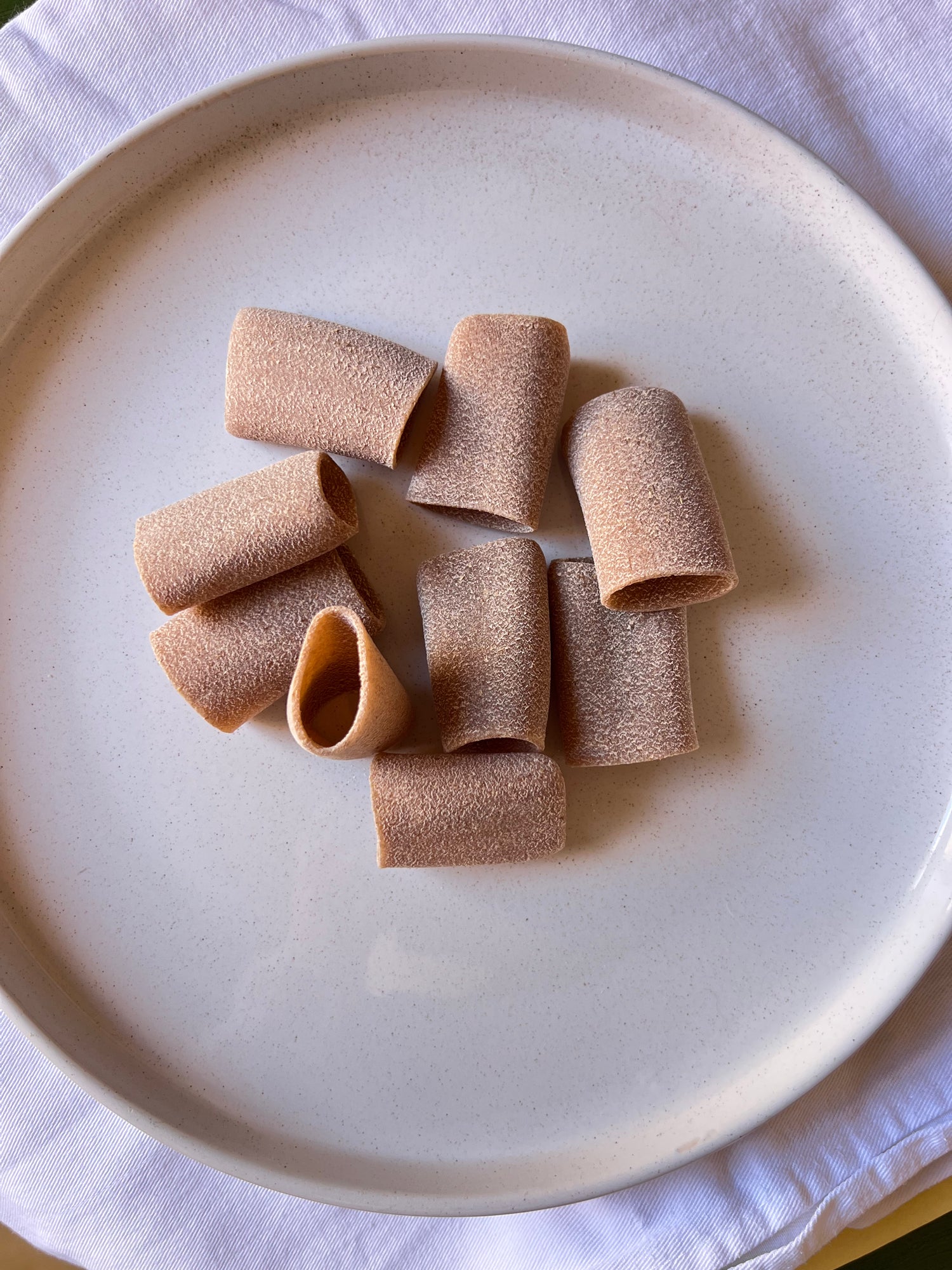
The whole wheat paccheri made from ancient Sicilian grain are produced by the Miceli Agricultural Company, a small Sicilian business located in the Buseto Palizzolo area, in the province of Trapani. The owner of this small enterprise, Rosaria, is committed to protecting biodiversity and preserving the natural heritage of the territory, cultivating ancient Sicilian grains that are then transformed into pasta in the province of Marsala.
ANCIENT GRAINS
Ancient grains are a particular type of non-genetically modified grains, called so to distinguish them from "modern" grains, meaning all those types of wheat that over time have undergone modifications by humans to meet the needs of the food industry. The variety used to make the Reginette is called Perciasacchi (Khorasan), from the Sicilian word "perciare," meaning to pierce, because the pointed shape of the grain caused holes in the jute sacks used for transport.
For the cultivation of this ancient grain, the technique of crop rotation is used, alternating wheat and legumes, in order to ensure better soil fertility. Moreover, these grains grow over six feet tall, naturally combating weeds without the need to use pesticides or fertilizers.
NUTRITIONAL BENEFITS
For the production of Paccheri, the grain is stone-ground and the processing is carried out at low temperatures, so as not to lose the nutritional properties present in the germ, such as the content of minerals, polyphenols, antioxidants, carotenoids, and vitamins, which consequently are present in higher concentrations compared to grain subjected to industrial processes. Additionally, ancient grains have a higher fiber content that helps keep the glycemic index low, along with a type of gluten that is much less resistant and less aggressive toward the immune system.
Overall, we can say that these types of grains are more respectful of our body, causing fewer inflammatory effects and improving digestibility.
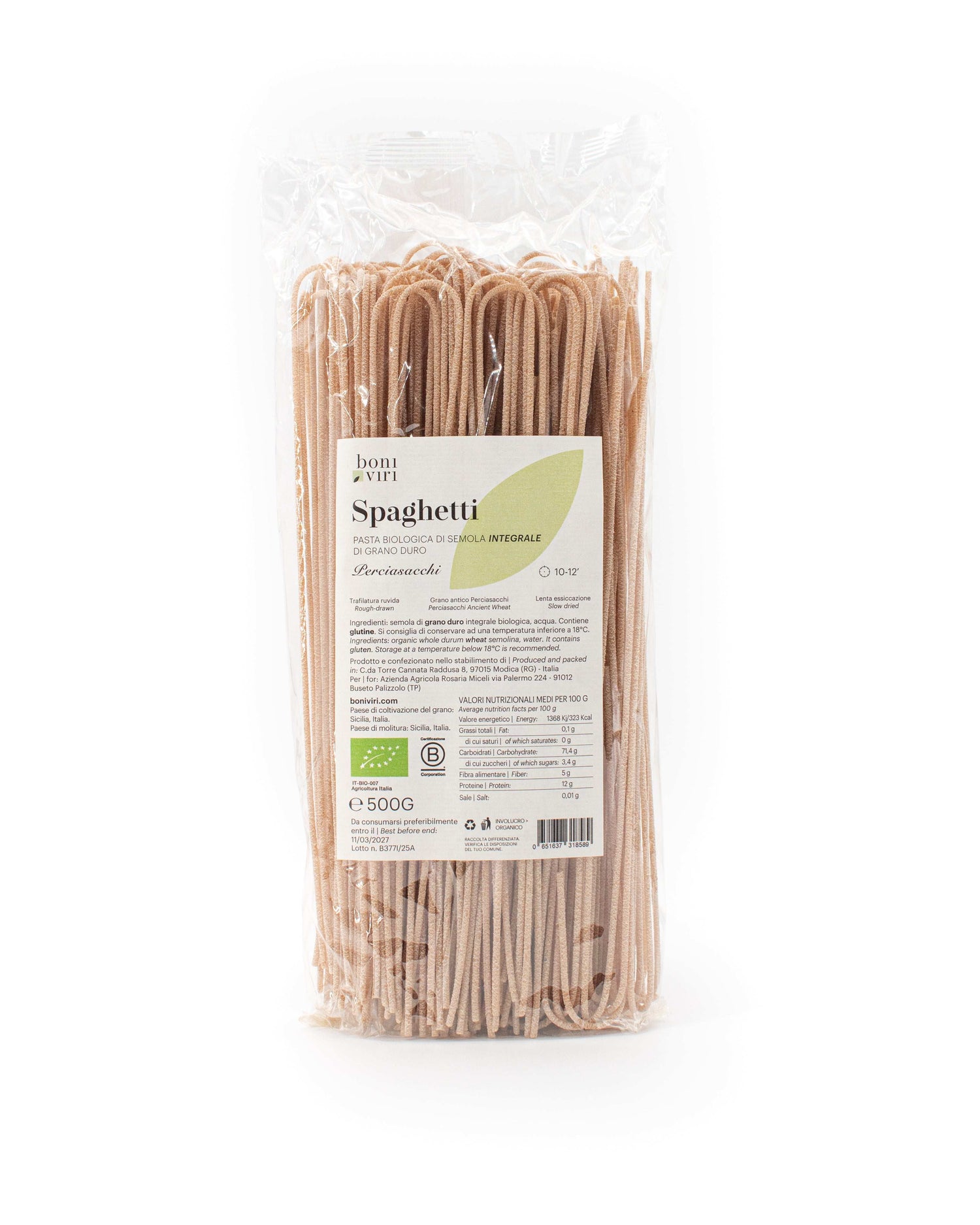


The organic Sicilian ancient grain Perciasacchi Boniviri spaghetti are made using sustainable, non-intensive farming practices. Perciasacchi, a rustic and fiber-rich variety, gives the pasta an intense flavor, a hearty texture, and natural digestibility.
Handcrafted and bronze-drawn, these spaghetti are ideal for those seeking healthy, traceable food connected to the biodiversity of the region.
Ancient grains are a particular type of non-genetically modified wheat, called so to distinguish them from "modern" wheats, which are all those wheat types that over time have been modified by humans to meet the needs of the food industry. The variety used to make the Reginette is called Perciasacchi (Khorasan), from the Sicilian "perciare," meaning to pierce, because the pointed shape of the grain caused holes in the jute sacks used for transport.
For cultivating this ancient wheat, the technique of crop rotation is used, alternating wheat and legumes to ensure better soil fertility. These grains also grow over six feet tall, naturally combating weeds without the need for pesticides or fertilizers.
Perfect with simple dressings based on extra virgin olive oil, seasonal vegetables, or rustic sauces, to bring a good, authentic, and sustainable dish to the table.
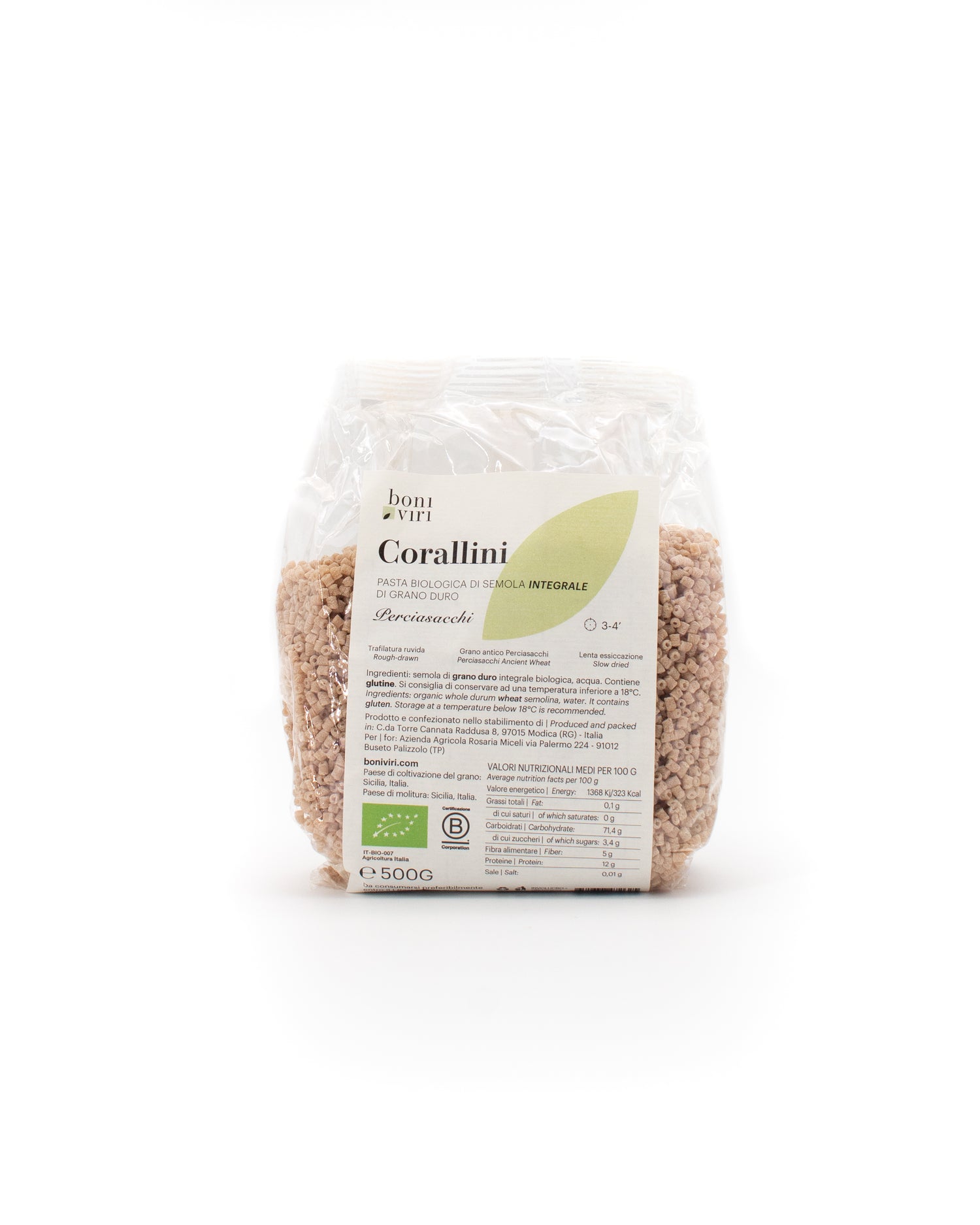
The Sicilian ancient wheat Corallini are produced by Azienda Agricola Miceli, a small Sicilian company located in the Buseto Palizzolo area, in the province of Trapani. The owner of this small business, Rosaria, is committed to protecting biodiversity and preserving the natural heritage of the territory, cultivating ancient Sicilian wheat varieties that are then transformed into pasta in the province of Marsala.
ANCIENT WHEATS
Ancient wheats are a particular type of non-genetically modified wheat, called so to distinguish them from "modern" wheats, which are all those wheat types that over time have undergone modifications by humans to meet the needs of the food industry. The variety used to make the Reginette is called Perciasacchi (Khorasan), from the Sicilian "perciare," meaning to pierce, because the pointed shape of the grain caused holes in the jute sacks used for transport.
For the cultivation of this ancient wheat, the technique of crop rotation is used, alternating wheat and legumes, in order to ensure better soil fertility. Moreover, these wheats grow over six feet tall, naturally combating weeds without the need to use pesticides or fertilizers.
NUTRITIONAL BENEFITS
For the production of Corallini, the wheat is stone-milled and the processing is carried out at low temperatures, so as not to lose the nutritional properties present in the germ, such as the content of minerals, polyphenols, antioxidants, carotenoids, and vitamins, which consequently are present in higher concentrations compared to wheat subjected to industrial processes. Additionally, ancient wheats have a higher fiber concentration that helps keep the glycemic index low, along with a type of gluten that is much less resistant and less aggressive toward the immune system.
Overall, we can say that these types of wheat are more respectful of our body, causing fewer inflammatory effects and improving digestibility.
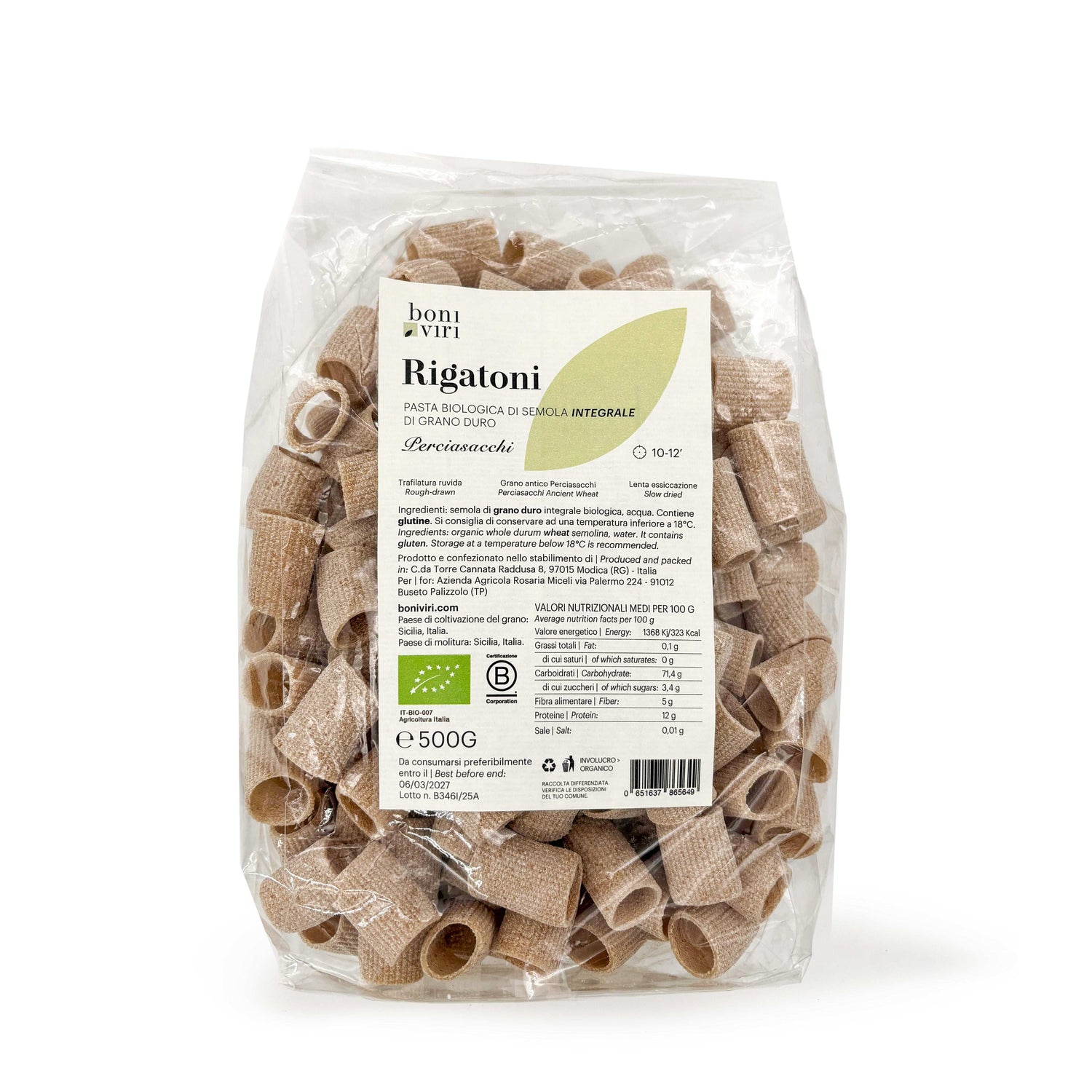


The Sicilian ancient wheat Rigatoni are produced by Azienda Agricola Miceli, a small Sicilian company located in the Buseto Palizzolo area, in the province of Trapani. The owner of this small business, Rosaria, is committed to protecting biodiversity and preserving the natural heritage of the territory, cultivating ancient Sicilian wheat varieties that are then transformed into pasta in the province of Marsala.
ANCIENT WHEATS
Ancient wheats are a particular type of non-genetically modified wheat, called so to distinguish them from "modern" wheats, which are all those types of wheat that over time have undergone modifications by humans to meet the needs of the food industry. The variety used to make the Reginette is called Perciasacchi (Khorasan), from the Sicilian "perciare," meaning to pierce, because the pointed shape of the grain caused holes in the jute sacks used for transport.
For the cultivation of this ancient wheat, the technique of crop rotation is used, alternating wheat and legumes, in order to ensure better soil fertility. Moreover, these wheats grow over six feet tall, naturally combating weeds without the need to use pesticides or fertilizers.
NUTRITIONAL BENEFITS
For the production of Rigatoni, the wheat is stone-milled and the processing is carried out at low temperatures, so as not to lose the nutritional properties present in the germ, such as the content of minerals, polyphenols, antioxidants, carotenoids, and vitamins, which consequently will be present in higher concentrations compared to wheat subjected to industrial processes. Additionally, ancient wheats have a higher fiber content that helps keep the glycemic index low, along with a type of gluten that is much less resistant and less aggressive toward the immune system.
Overall, we can say that these types of wheat are more respectful of our body, causing fewer inflammatory effects and improving digestibility.

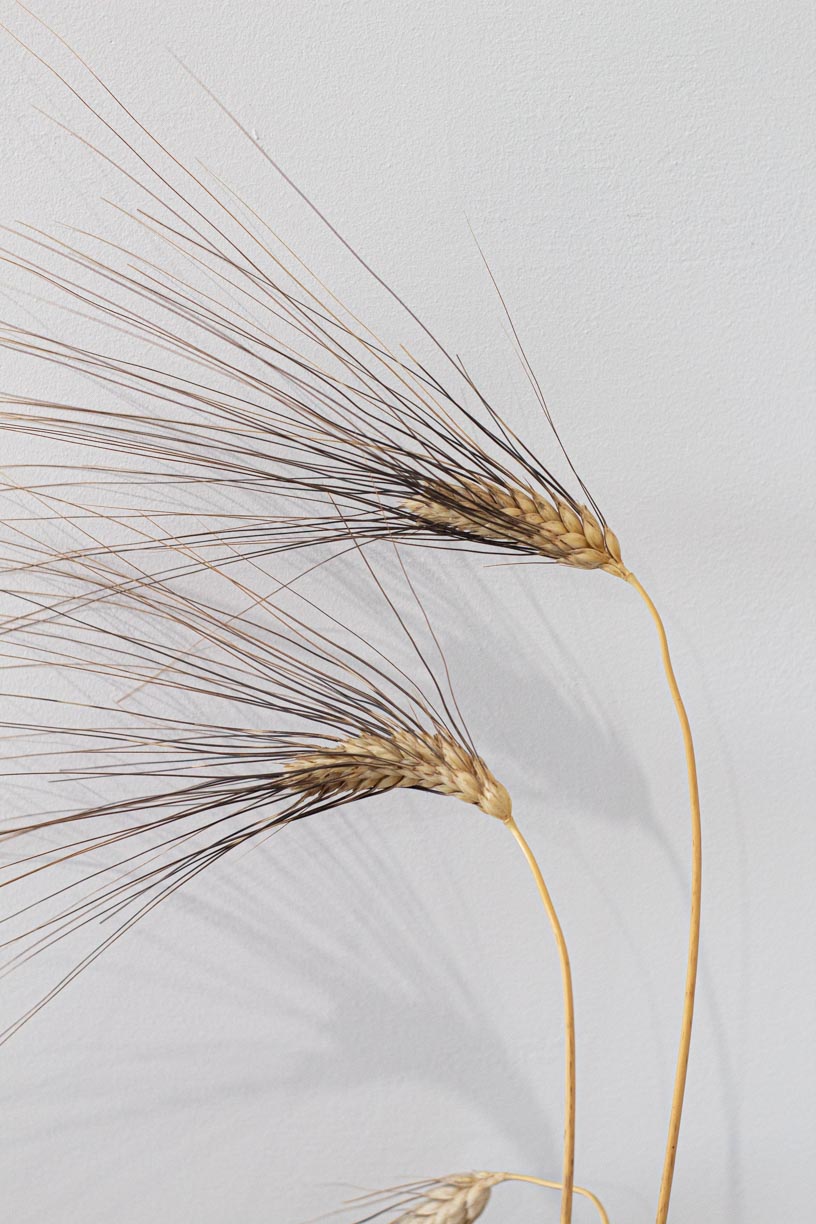

The Boniviri reginette are an artisan organic pasta made with ancient Perciasacchi wheat, grown in Sicily using regenerative practices, without chemical substances, respecting biodiversity and ethical farming.
This organic pasta is bronze-drawn and slowly dried at low temperature to preserve all the nutritional properties of the wheat and ensure perfect cooking firmness. The traditional spiral shape makes busiate ideal for vegetable sauces, almond pestos, legumes, or seasonal vegetables.
Perciasacchi is an ancient wheat rich in fiber and naturally digestible: a conscious choice for those seeking healthy, sustainable pasta with authentic flavor. Each package tells the story of our farmers’ work and a traceable supply chain from sowing to plate.


The organic Sicilian ancient grain Perciasacchi Boniviri spaghetti are made using sustainable, non-intensive farming practices. Perciasacchi, a rustic and fiber-rich variety, gives the pasta an intense flavor, a hearty texture, and natural digestibility.
Handcrafted and bronze-drawn, these spaghetti are ideal for those seeking healthy, traceable food connected to the biodiversity of the region.
Ancient grains are a particular type of non-genetically modified wheat, called so to distinguish them from "modern" wheats, which are all those wheat types that over time have been modified by humans to meet the needs of the food industry. The variety used to make the Reginette is called Perciasacchi (Khorasan), from the Sicilian "perciare," meaning to pierce, because the pointed shape of the grain caused holes in the jute sacks used for transport.
For cultivating this ancient wheat, the technique of crop rotation is used, alternating wheat and legumes to ensure better soil fertility. These grains also grow over six feet tall, naturally combating weeds without the need for pesticides or fertilizers.
Perfect with simple dressings based on extra virgin olive oil, seasonal vegetables, or rustic sauces, to bring a good, authentic, and sustainable dish to the table.


The organic Sicilian ancient grain Perciasacchi Boniviri spaghetti are made using sustainable, non-intensive farming practices. Perciasacchi, a rustic and fiber-rich variety, gives the pasta an intense flavor, a hearty texture, and natural digestibility.
Handcrafted and bronze-drawn, these spaghetti are ideal for those seeking healthy, traceable food connected to the biodiversity of the region.
Ancient grains are a particular type of non-genetically modified wheat, called so to distinguish them from "modern" wheats, which are all those wheat types that over time have been modified by humans to meet the needs of the food industry. The variety used to make the Reginette is called Perciasacchi (Khorasan), from the Sicilian "perciare," meaning to pierce, because the pointed shape of the grain caused holes in the jute sacks used for transport.
For cultivating this ancient wheat, the technique of crop rotation is used, alternating wheat and legumes to ensure better soil fertility. These grains also grow over six feet tall, naturally combating weeds without the need for pesticides or fertilizers.
Perfect with simple dressings based on extra virgin olive oil, seasonal vegetables, or rustic sauces, to bring a good, authentic, and sustainable dish to the table.
Pasta as it once was
Unlike industrial pasta, Boniviri pasta is made only with ancient organic grains .
Ancient grains are those of the past: cultivated before intensive agriculture, never modified, almost forgotten.
Despite having a lower production yield, today we are rediscovering them for what they are: healthier, more sustainable and tastier.


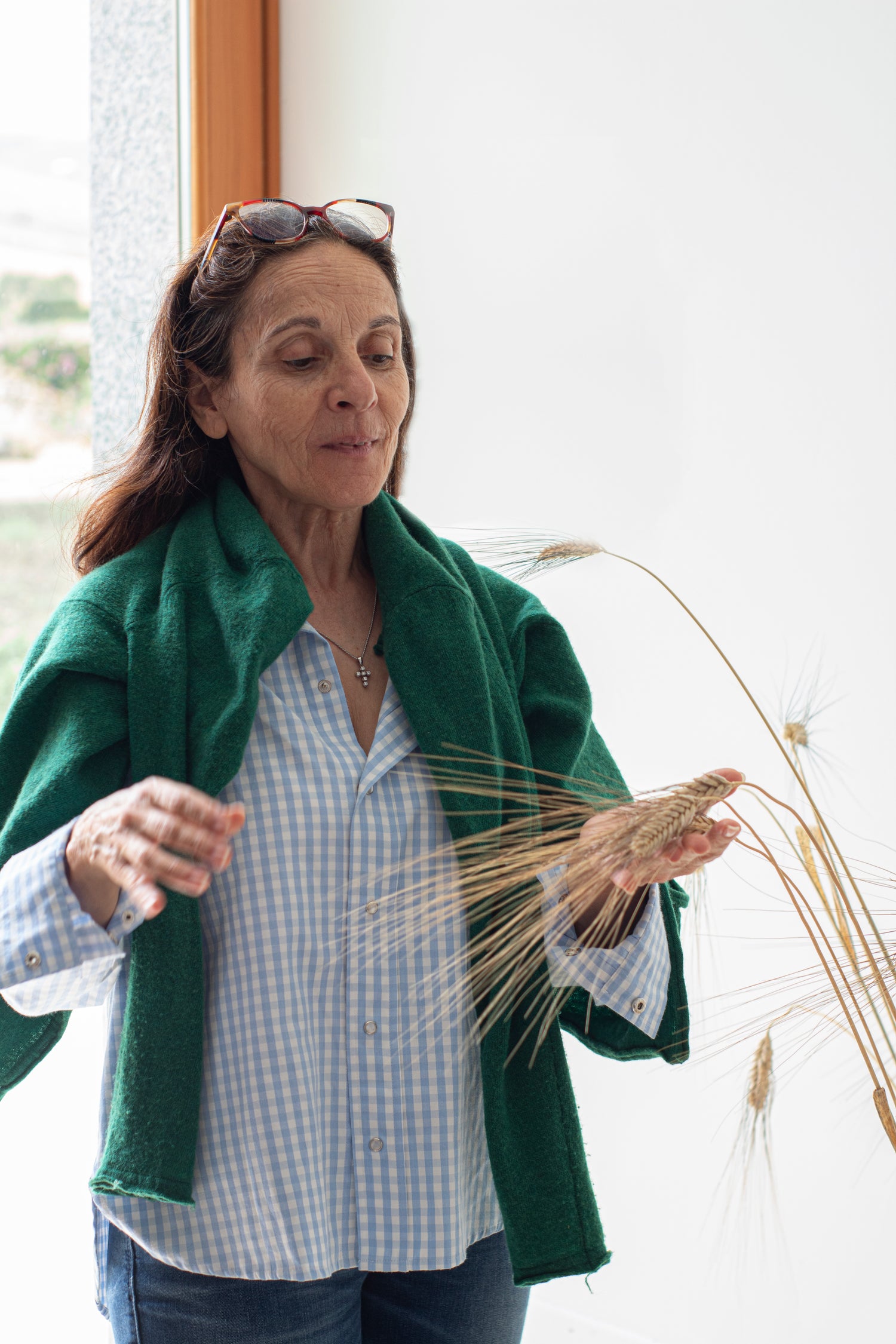
Made with passion
Ancient grains, clean methods, artisanal care: here is our recipe.
- Protection of biodiversity and ancient Sicilian grains: we preserve the agricultural memory of the territory, renouncing modern high-yield hybrids to preserve flavor and nutritional benefits.
- Organic farming since 2001: without the use of pesticides, herbicides or chemical fertilizers, respecting the soil and aquifers. The rotation between cereals and nitrogen-fixing legumes naturally enriches the land.
- Cold storage : after harvesting, the wheat is stored at a controlled temperature. The cold protects from mold and insects, without the use of chemical agents, and keeps the nutritional and organoleptic properties of the grain intact.
- Ancient washing technique : before milling, the wheat is carefully washed with water. This ancient technique removes all impurities and softens the grain, preparing it for a more delicate and respectful processing.
- Stone milling: stone milling does not overheat the flour and preserves the wheat germ, the part richest in nutrients, intact.
The result is a lively, nutritious and tasty pasta.
Know who makes it
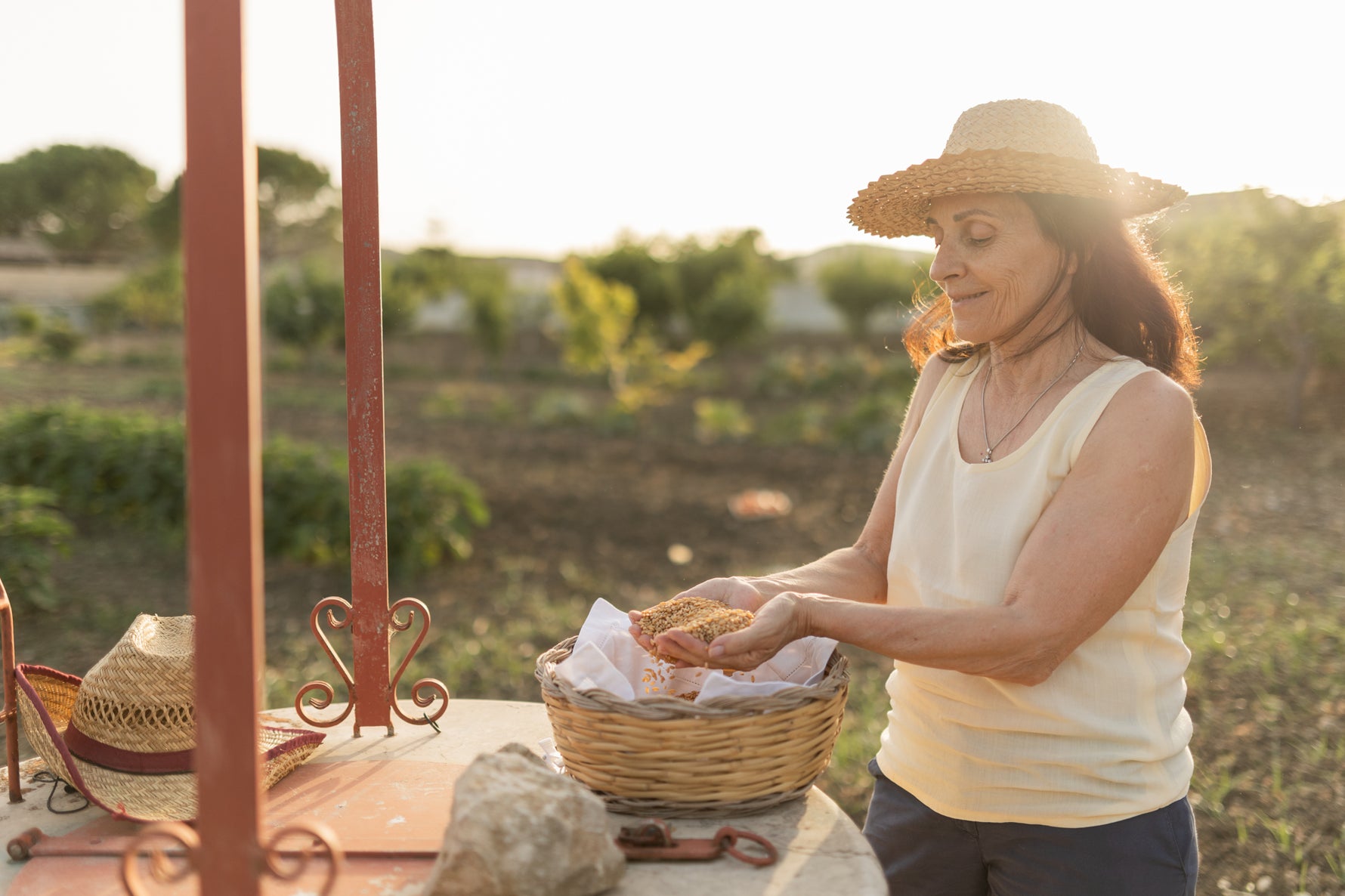
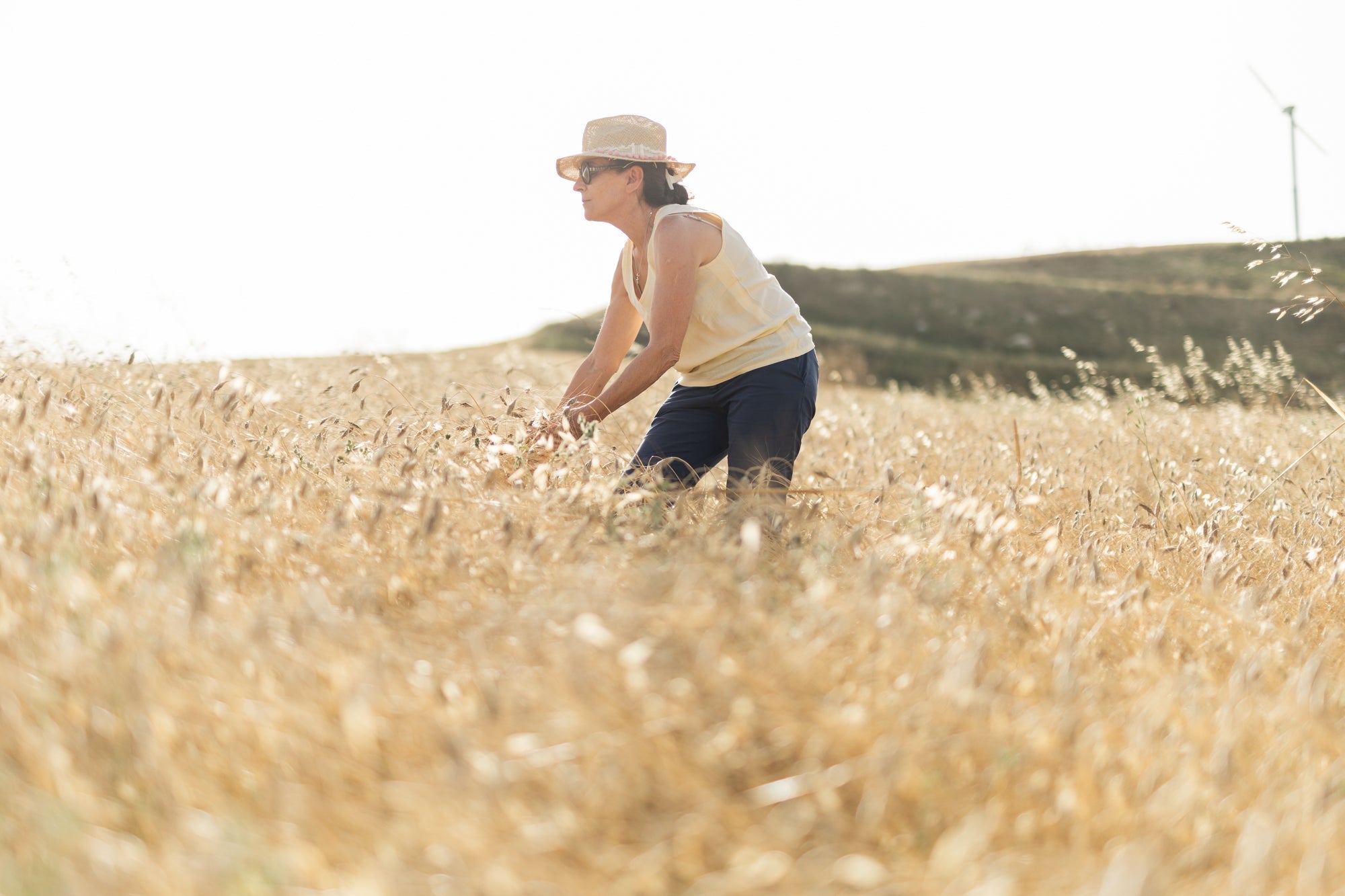
“As a child, together with a local lady, I harvested wheat in a field near my house to ensure bread for those who could not produce it themselves. This experience taught me the value of working the land and the importance of sharing what we have with others.”
Rosaria Miceli is the owner of the farm that produces our pasta. She does it with a lot of passion, and an organic, innovative, courageous culture.
The company extends among the Trapani hills, in Buseto Palizzolo, between Erice and Segesta.