

March 13, 2021
The “Pizzuta d’Avola,” known and appreciated even beyond Sicilian borders, is a typical variety from the Val di Noto region.
“A perfect oval that brings to mind the female faces painted by Antonello”
The almond tree “Amygdalus communis,” native to Central-Western Asia, is a fruit tree belonging to the Rosaceae family and the Prunus genus.
Presumably, the first specimens date back to the Bronze Age, and similarly, there is uncertainty about the presence of wild species in Sicily.
Depending on the characteristics of the almond, the following varieties are distinguished:
- bitter, whose seeds contain hydrocyanic acid;
- dulcis or sativa, whose seeds are used in food, confectionery, and for extracting almond oil;
- fragilis (or sticciamani), with sweet seeds but a non-woody endocarp.
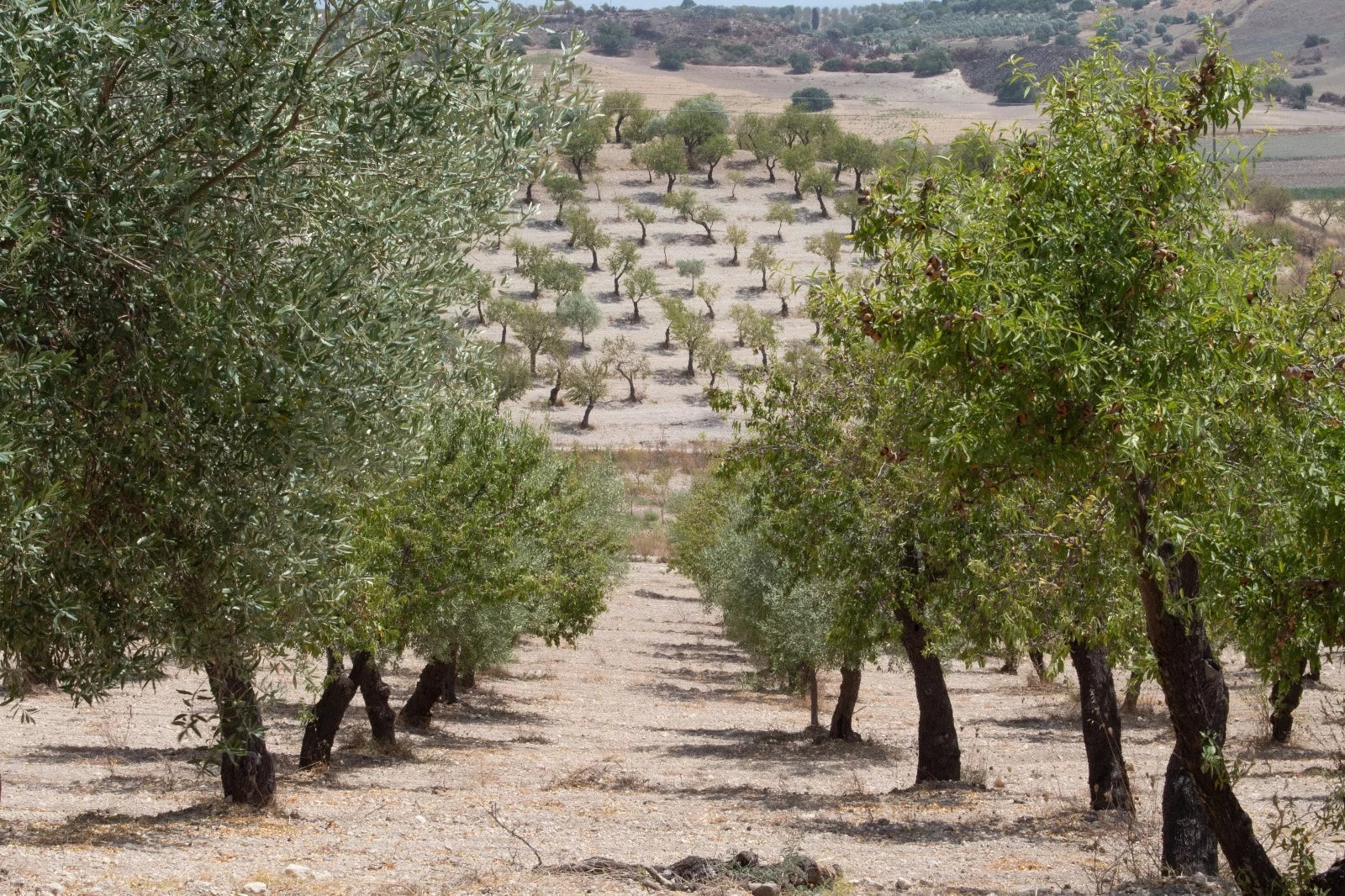
The plant has medium growth, with a rough trunk and a rounded crown. The roots are fibrous and can explore the soil covering an area 6-7 times larger than the crown.
The almond, a dry indehiscent fruit (meaning it does not open at maturity), consists of an outer shell called the “hull” that dries at maturity; a woody inner shell inside which is the edible part, the seed, covered by a wrinkled reddish-brown skin.
Often, two seeds can be found inside the same shell, and this characteristic can be positive if the almond is intended for the confectionery industry and processing, but it can also be considered a defect if it is meant for direct sale as nuts.
The “Pizzuta d’Avola” is a typical variety from the Val di Noto area, particularly from Avola in the province of Syracuse.
Its distinctive features are its size, larger than other varieties, and the pointed tip (from which its name derives).
The “Avola almond,” whose denomination includes the three different known cultivars Pizzuta, Fascionello, and Romana, is currently listed among the Traditional Agri-food Products (PAT) of the Sicily region.
It has a hard, smooth shell with small pores. Its seed is flat and reddish leather-colored. The excellence of the Pizzuta also lies in the fact that it does not require irrigation, resulting in a drier almond with a low moisture content, with a shell that seals the seed well, thus preventing many pests from damaging the product’s quality!
However, being a self-incompatible species and therefore unable to reproduce on its own, it requires plants to act as pollinators, and for this reason, the cultivar that generally accompanies it is the Fascionello.
The Pizzuta d’Avola has a shelled yield of 20-25%, a value considered within the standard range.
A natural anti-inflammatory, antioxidant, valuable dietary supplement, rich in nutrients, the Avola Almond is a must in quality pastry, superb granitas, refined almond milk, and confectionery.
It contains large amounts of potassium, magnesium, phosphorus, vitamin B1, important for the normal functioning of the nervous system, calcium, and iron; for this reason, it is considered a food that should never be missing from diets and healthy nutrition.