

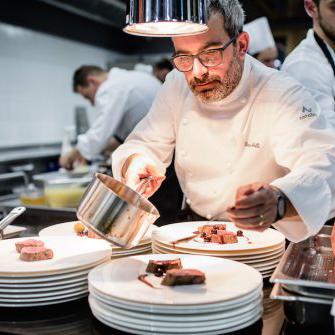
As the car climbs the winding hairpin bends leading to the fairytale village of Champoluc in the Aosta Valley, I think back to our first phone call. “I really like your project, it’s brave. Your sustainable philosophy is interesting. Can you send me some samples?” After months of virtual exchanges imposed by the pandemic, we can finally meet. The emotion is strong, not only because Luca Gubelli - Executive Chef of campZero, a 5-star Active Luxury Resort in Champoluc, Aosta Valley - is an excellent Chef, but also because he was among the first to believe in the Boniviri project, one of nearly thirty small producers personally selected by him for campZero’s two restaurants: the “Cliffhanger’s Grill”, the casual brasserie for hotel guests, and the "Summit Restaurant", the gourmet venue open only in the evening, where Luca, through truly unique sensory and emotional atmospheres and landscapes, leads enthusiasts of food and wine excursions to very high peaks.
“The administration hates me,” he jokes. “I have four suppliers just for cheeses.” So a flood of bubbles and invoices daily overwhelms the purchasing office. “Not to mention the logistical hassles I have to handle personally. But this makes the difference; it’s what makes my cuisine good and right. I get blueberries from a lady in town; she picks them by hand and brings them fresh. I’m lucky, here at campZero I have free rein.”
From Mozzate to Champoluc, I ask him what brought him all the way up here after a career of over thirty years built with sacrifice in Milan’s most glamorous restaurants. “It was great, but I couldn’t take it anymore; my daughters were grown up, it was the right time.” And the right place… “Yes, my career started in ’89 and in ’93 I came to Aosta for the first time to work with Chef Paolo Vai, two Michelin stars. I’ve always had this valley in my heart.”
While we chat, a colleague brings us one of his fruit juices, apple and ginger. In that simple—and so good—juice is concentrated his entire idea of cuisine. Simple ingredients, carefully selected and cooked with skill and creativity. “A concept of cuisine that maybe isn’t Instagrammable (but actually it is, just look at the gallery) and particularly innovative (and I assure you, there’s a lot of innovation), but it’s authentic because it’s mine. Here at campZero I have reached my ‘gastronomic maturity’ with my concept of ‘Alpine Fusion’ cuisine”. A perfect synthesis of cultures, cooking methods, and ingredients extremely distant and different from each other. You can feel it as he proudly guides me through campZero’s spaces; even the personality of the restaurants is entirely his. “I designed the kitchen, the systems, the equipment, the restaurant strategies—in short, I tailored this place to myself.”
We are interrupted by the confused voices of a couple of guests who entered through a service door instead of the main entrance. He is a distinguished man, dressed head to toe in designer labels; she is a lady with discreet charm reflected in her precious jewelry. I ask Luca if sustainable cuisine is democratic, or if it is destined to remain a luxury for a few: “Do you think everyone can buy a fifty-thousand-euro car? No, yet people make payments for ten years because they can’t afford it, just like three-hundred-euro shoes and a thousand-euro bag. Why the bag yes, the shoes yes, and food no? That’s the question we have to ask ourselves and then make consistent choices: eat less, eat better, to respect the work of small growers, the planet, and ourselves.”
When it comes to sustainability, Luca is uncompromising. “If I walk into the kitchen and see the tap running, I become a hyena. This way, I’ll already be dead, I tell the guys, but you won’t even have water to drink if you keep going like this. Our job as Chefs is also to educate on these issues; unfortunately, schools don’t do enough.” For him, sustainability also means knowledge of the territory, the growers, and their products. There is still much to do here as well. “Often cooks come to me, even from important restaurants and multi-Michelin-star hotels, who don’t know how to clean fish, debone, or recognize a cut of meat. Nowadays distributors bring food already cleaned and ready to put in the oven. Is that cuisine, do you think?”
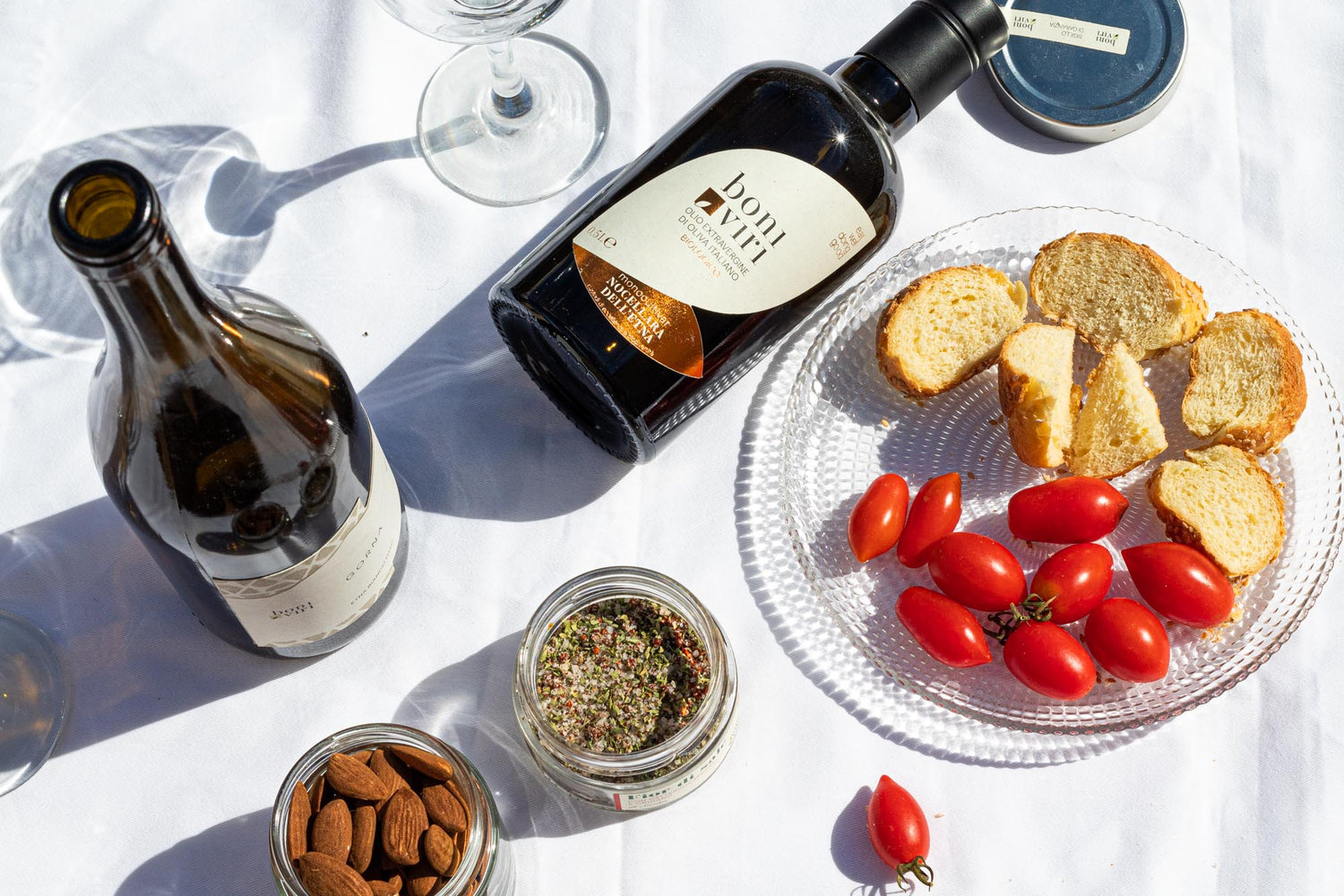
It’s lunchtime; we move to the outdoor area overlooking the large park surrounding the hotel. “Luca, you lead.” We start with a selection of breads served with oil, naturally Boniviri. Even though the restaurant is casual, guests don’t want to give up their luxurious composure and, trying not to be noticed, dip the bread in the oil like children dipping their noses into cotton candy at the amusement park. They close their eyes, lost in silent enjoyment, and, losing all restraint, go for another dip. What a satisfaction! “Some customers ask me for a bottle before leaving. This oil is really good, they tell me.” Then comes the beet-marinated trout with oyster mayonnaise. An explosion of colors, flavors, and emotions that continues throughout the lunch and never leaves me.
We finish with a bread dessert resting on a bed of blueberries, amazing. It’s time to return to the valley; before saying goodbye, I ask him what the cuisine of the future will be like. “Globalization is inevitable; we will only have vertical concepts. Pizza will survive, and restaurants will disappear, except for those of the highest level. It’s a very clear trend among young people that will only strengthen.”
Luca, is it worth it? “As long as at least one in ten understands my project, yes. Because we will have contributed to a healthy, good, and fair cuisine.” As these words accompany me along the hairpin bends back down the valley, I think that his cuisine, brave and tenacious, is one of the best medicines for this time, sick of straight and clear roads. Of easy solutions and compressed times, short views and narrow perspectives.
Thank you, Luca.
Photo credit: Manufatto