

January 30, 2023
If there’s one thing we’ve learned over the past three years, it’s to take care of ourselves, our health, and our diet. One of the most fascinating and common ingredients in must-have recipes for caring for our bodies is honey. Yes, honey itself—a remedy against coughs, a friend to the skin and the environment. With its syrupy texture due to the mix of fructose, glucose, sucrose, and other sugars; we recognize its smell and probably know how to use it in some recipes, but what are the beneficial properties of honey? And what new technologies can transform one of the oldest ingredients in Western tradition into an innovative product for food preservation?
Honey is one of the oldest products in history. Used since prehistoric times, the earliest traces date back to the ancient Egyptians, inventors of nomadic beekeeping and experimental medicine, which is now coming back into fashion, and where the cornerstone was precisely the nectar of the gods. The Sumerians and Babylonians discovered its beneficial properties for the skin, so much so that the Code of Hammurabi included penalties for those who tried to steal it. Finally, the Greeks and Romans raised bees to obtain honey, which was used to sweeten food and drinks; in particular, they loved adding it to wine.
Over time, honey lost some ground, gradually replaced by sugar, but recently consumers have revived grandma’s old remedies, always effective and often more eco-friendly. Few remember that before the advent of plastic wrap and widespread use of plastic, one of the oldest methods to preserve food involved wrapping it in beeswax cloths. This allowed for longer food preservation, preventing a significant portion of global waste that often starts right in our kitchens.
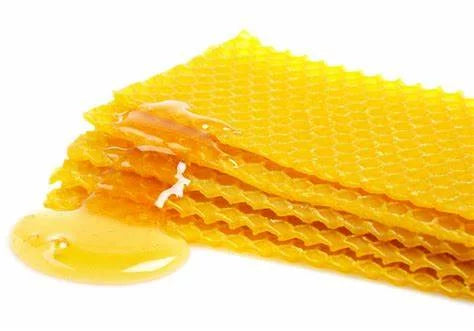
Sometimes new technologies are just old strategies revisited, and in this sense, a new trend is gaining ground in Italian kitchens and restaurants: the use of beeswax wraps to keep freshness. The wax is usually produced in thin flakes by the insects themselves to build the hexagonal cells of the so-called honeycomb, where honey and pollen are stored.
Wax obtained solely by melting with hot water and without adding other substances is called "virgin wax," widely used to cover cheeses but not only: it can be transformed into wraps, as done by the startup Beeopak, which makes them from organic cotton soaked in beeswax, organic Piedmontese IGP hazelnut oil, and pine resin.
Like honey, wax has antibacterial properties that protect food, but above all, it has the unique characteristic of being breathable yet waterproof; consequently, it does not easily let moisture droplets pass through, protecting the product’s organoleptic qualities and reducing waste.
At Boniviri, besides loving honey, we know how essential bees are for agriculture: through Rosario, our itinerant beekeeper, we have chosen to protect the Sicilian Black Bee, an endangered species reintroduced a few years ago thanks to the Sicilian Apis mellifera breeders association. This special bee produces Boniviri’s delicious honeys such as wildflower and chestnut, and, supported by other species, sulla and orange blossom honey. All organic, genuine, raw, neither centrifuged nor pasteurized, they retain their natural nutritional properties that help prevent diseases caused by oxidative stress and respiratory system infections.