

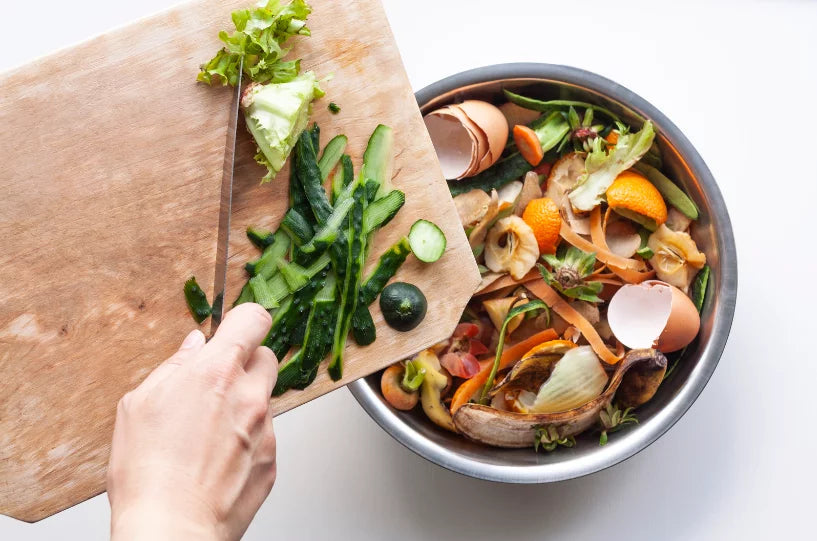
Food waste has social and environmental implications. Every year, millions of tons of food are thrown away, while a significant portion of the population lives in food insecurity. It is estimated that if global food waste were a country, it would be the third largest emitter of CO₂ in the world. Climate change is both a consequence of CO₂ emissions from food waste and, paradoxically, one of its causes: fluctuating climate patterns negatively impact agricultural production, making it less resilient, especially summer crops grown in open fields. This leads to food waste occurring throughout the entire supply chain, from farm to table.
To help break this cause-and-effect cycle, here are 7 actions each of us can take to reduce food waste at home:
-
MAKE A SHOPPING LIST
Making a list of items to buy will help reduce impulse purchases and consequently food waste. Buying in bulk can be cost-effective, but it has been shown to lead to more food waste and, therefore, economic loss from food that is not consumed. -
STORE FOOD PROPERLY
Much household food waste happens due to spoilage that can be avoided with proper storage. To prevent this, organize your fridge and pantry based on expiration dates, so you can easily consume items nearing their expiry first, prioritizing perishable foods. You can check optimal storage conditions to ensure an adequate shelf life: did you know, for example, that potatoes, tomatoes, garlic, cucumbers, and onions should not be refrigerated? And that some foods (like bananas, tomatoes, peaches, pears, onions) produce ethylene, which accelerates ripening and can cause premature spoilage of fruits and vegetables? -
USE YOUR SIGHT AND SMELL
While the expiration date is a guideline for food safety, foods that have just expired or are close to expiring may still be safe to eat. Besides checking the date, use your eyes and nose to inspect food and determine if it can still be consumed. -
GIVE SURPLUS FOOD A NEW LIFE
Drying, blending, canning, and preserving are all strategies to extend food’s lifespan. Fresh fruit, the most wasted food at home, can be turned into preserves (to enjoy out of season) and smoothies; vegetable peels become chips and broths; stale bread regains flavor in coatings, soups, and burgers. Freezing is also an option: almost everything can be frozen, from fresh herbs bought in bulk to broths and wine… -
EAT ALL PARTS
Before throwing something away, consider if the part you’re discarding could be the star of your next dish. Almost all parts of vegetables can be eaten, and if you don’t eat them, it might be because you haven’t yet found a way to make them delicious. Stems, stalks, and leaves can be blended, roasted to make them crispy, or used to prepare vegetable broth. Pumpkin seeds are great roasted, and carrot leaves can be used to make a tasty pesto.
Household food waste increased from 2023 to 2024, reaching and exceeding 600 grams per person per week (Waste Watcher, 2024). To reduce waste, it’s important to think preventively by reflecting on shopping and consumption habits. Meal and shopping planning are essential to prevent waste, yet according to the Waste Watcher survey, these actions are also the least practiced. With this list, we hope to inspire action so that each of us becomes aware of our impact and acts to reduce it.