

Publication date: October 25, 2021
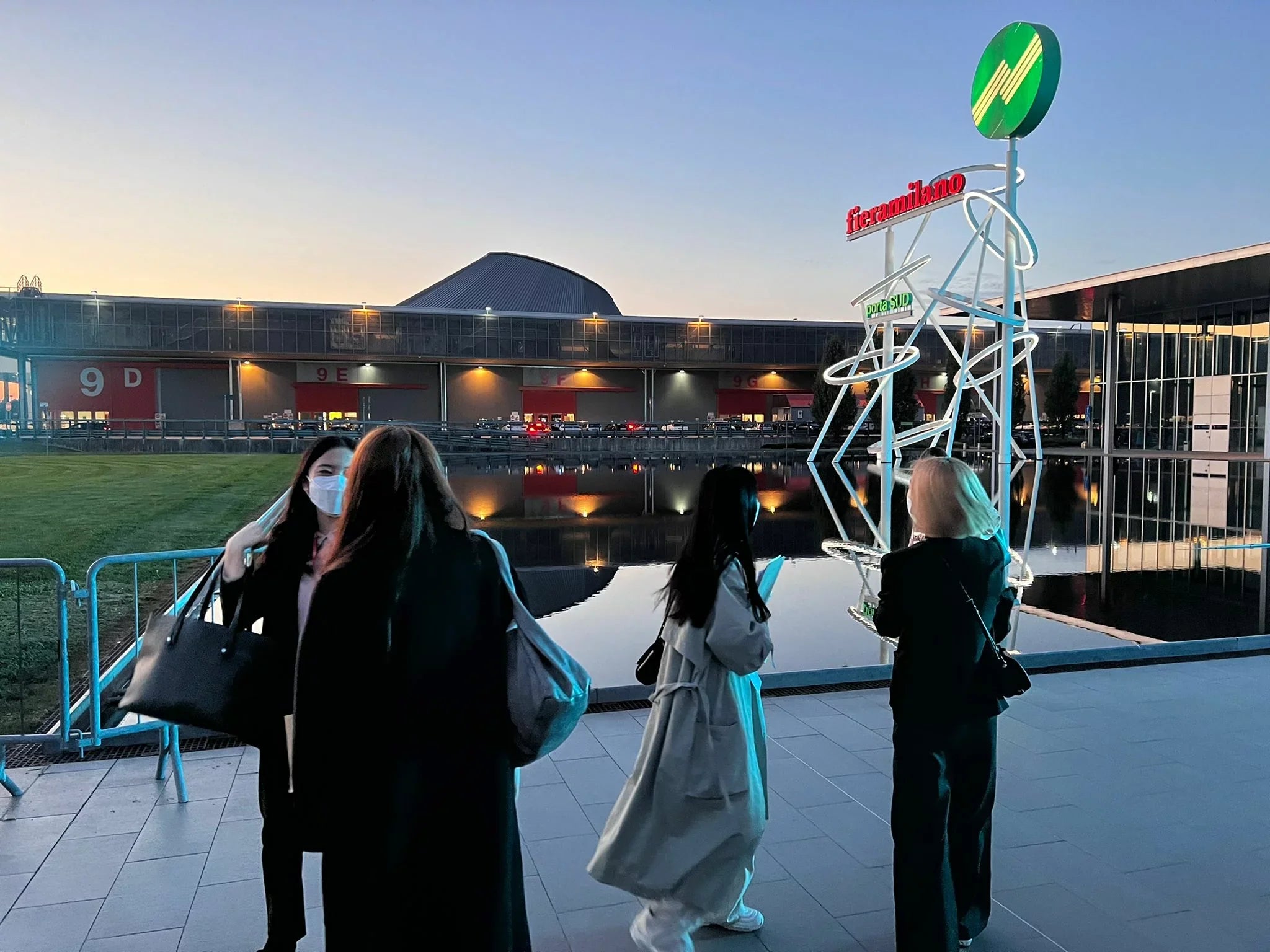
From October 22 to 26, Boniviri participated in TUTTO FOOD in Milan, one of the most important international fairs in the food world. It was a great thrill and also an opportunity to present Boniviri on an international level.
However, we asked ourselves: what is the environmental impact of a trade fair? And how can we do our part to be more sustainable and consistent with our way of doing business?
We did some research, and Chiara Civardi’s article, “Making industrial exhibitions green,” sheds light on the impact of the trade fair sector and the less sustainable practices related to fairs.
To give an idea of the scale of these events, as reported in the study, in 2018 the number of fairs organized in Europe exceeded 2,670, with over 735,500 exhibitors and 75.4 million visitors.
As the author points out, “despite their importance, conventional industrial events have substantial environmental impacts. In fact, these gatherings require energy and resources, and are also responsible for emissions across all environmental sectors: air, water, and soil.”
To illustrate, a 3-day conference with 800 participants has an estimated carbon footprint of 455 tons of CO₂ equivalent, corresponding to an average of 0.57 tons of CO₂ per participant.
For its travel, the Boniviri team generated an emissions impact of about 1 ton of CO₂ equivalent. For this fair, the Boniviri team (consisting of 5 people), considering travel by plane, car, motorcycle, and subway, generated an emissions impact of about 1 ton of CO₂ equivalent. This impact will be included in our 2021 Impact Report and will be offset.
Beyond emissions, material waste is central to the analysis of the environmental impact of a trade fair event. Just look around to see how many components of the stands prepared by companies are destined not to be reused.
Considering Boniviri’s nature as a benefit corporation and the social and environmental goals that distinguish our startup, from our stand we wanted to send a strong, clear, and direct message about the commitments we have made. We imagined a stand where all the components used could find a second life, where material waste was minimized, and where the origin of materials was considered in terms of sustainability.
At the center of the stand, we placed three trees donated by our partner Rete Clima: these are the ones used for the nonprofit’s reforestation projects. The bottles of our 750 ml extra virgin olive oil, the first Italian organic carbon-neutral oil, are anchored to their roots.
The eco-pallets supporting them are unique. Healthy, systemic, and ethical. The wood they are made from comes from the PEFC supply chain, which certifies the entire wood supply chain, from production to processing. They are the work of PALM SB Ecosustainable Pallet and Packaging in Wood, the first company to obtain B Corp certification in Italy in the pallet world, brought to the fair thanks to the perseverance of Primo Barzoni and Matteo Consolini.
All printed communication is made with Favini crush paper, obtained from agro-food waste from #olives and with a 20% reduction in carbon footprint.
Boniviri’s displays and panels are all made of cardboard and eco-sustainable materials.
We can call it an eco-stand, small but with a great desire to tell and be told. After 4 days of the fair, we can say it sparked a lot of curiosity from visitors, other exhibitors, and organizers.
We found that often it is more rewarding to subtract than to add. We hope our small experiment can be replicated and allow other companies in our and other sectors to rethink how they communicate and present themselves at fairs: looking at sustainability first and foremost as an ethical driver, which can no longer be ignored, but also as a competitive lever that can help distinguish those who do business “the old-fashioned way.”