

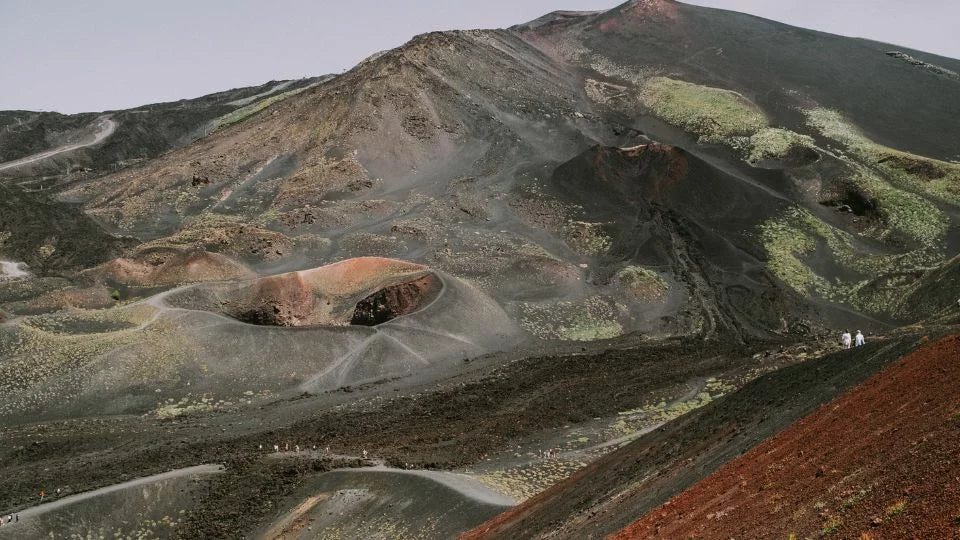
If in recent years Etna wines have established themselves globally among industry specialists, it is thanks to its unique terroir: a combination of elements – microclimate, soil, grape varieties, and human intervention – that have transformed this area into a region with a strong winemaking vocation.
A territory with a unique microclimate generated by extreme temperature variations. Although the latitude is African – Catania is located at the same latitude as the northern tip of Tunisia – the altitude is alpine: the vine on Etna, which at 3,340 meters above sea level is the highest active volcano in Europe, is cultivated up to 1,300 meters in elevation. In a limited geographic area, therefore, Mediterranean and mountain climates coexist. And while in winter, especially on the northern side, temperatures can drop below zero, in summer they can exceed 40 °C, with a day-night temperature range reaching 30 °C.
Then there is the soil. On the slopes of Etna, which has been rumbling continuously for at least 2,700 years, craters, caves, and fissures have formed; thick layers of ash and lapilli have been deposited; thousands of lava flows have extended, enriching this soil – generally dry and sandy with very high drainage capacity – with abundant amounts of minerals and trace elements. A terrain that, thanks to its composition, allows the vine to fully express its potential.
The work of visionary winemakers did the rest: thanks to them, the area around the volcano has become the ideal destination for wine enthusiasts and food lovers.