

November 15, 2021
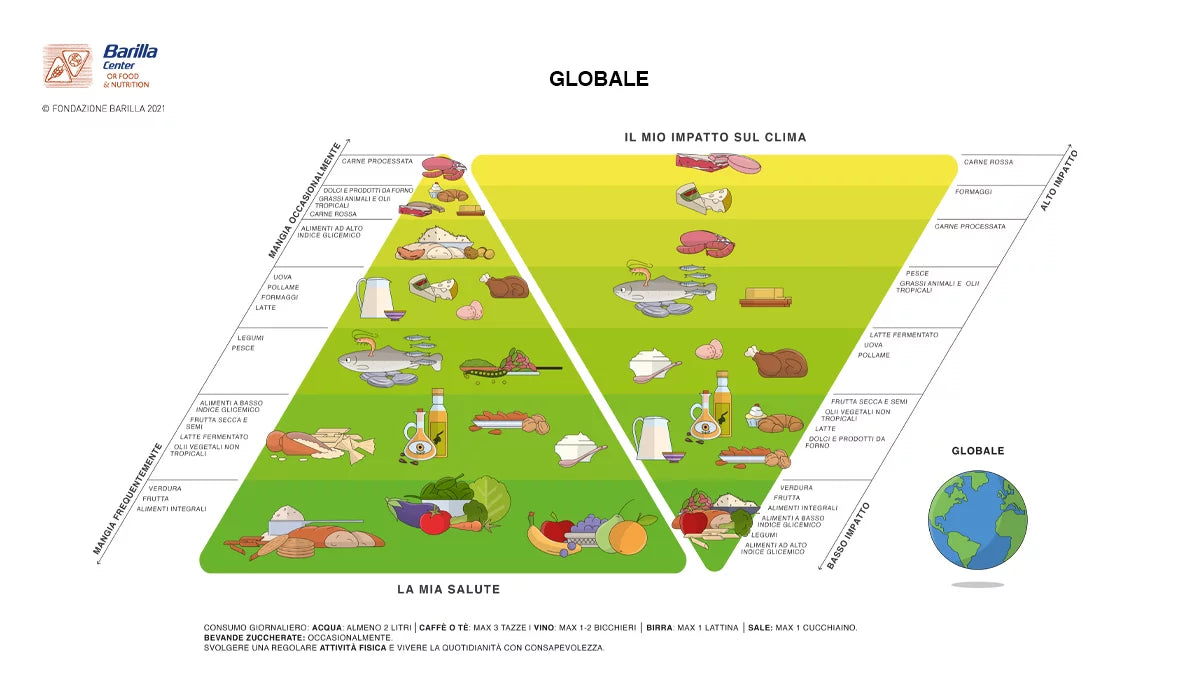
For a long time, nutrition science has represented foods in a food pyramid: at the base are nutrient-rich foods to be consumed more frequently, while at the top are those with high energy density to be eaten in moderation. The foods at the base are mainly plant-based.
Extra virgin olive oil, included in the pyramid, is recommended for daily consumption thanks to its polyphenols and phytosterols, which have a protective effect on the body.
If we shift the focus from health aspects to environmental impact, we notice that the pyramid is reversed: this is how the Environmental Pyramid was born. Plant-based foods have a lighter environmental impact, while animal-based foods generate greater externalities.
In the environmental analysis of food products, impacts are assessed using the Life Cycle Assessment (LCA) method, considering greenhouse gas emissions (carbon footprint), land use (ecological footprint), and water resource consumption (water footprint).
The representation of the "double pyramid" places the two schemes side by side, creating a unique approach to healthy and sustainable nutrition. Foods recommended for health are often also those with a lower environmental impact.
Boniviri, with its mission, aims to create value both for those who cultivate and those who consume. It selects products from excellent small farmers that are "light" on the environment and healthy for those who consume them.