

October 13, 2022
Dynamic, effective, but above all smart. Millennials are investing (successfully) in the land, founding purpose-driven businesses.
Thanks to the effect of social media, this once overlooked profession is now gaining more and more followers.
There used to be lawyers, doctors, engineers. Then came chefs, designers, influencers. Time passed, as did these trends, but at the top of the pyramid remained a profession no one dared to undertake: the farmer.
Yet, something is changing. In 2020, the year of the pandemic outbreak and the first lockdown, out of 86,000 businesses founded in Italy by young people under 35, over 6,000 were active in agricultural services, just after Retail Trade (over 10,000) and Specialized Construction (over 8,000).
Young Italians know what they are doing, more than their European peers. According to the latest Eurostat data, farms run by under-35s in Italy generate much more standard output per hectare compared to major European countries: +36% compared to Germany, +57% compared to France, +60% compared to Spain.
Young Italian farmers also outperform their compatriots over 55, with a yield per hectare 40% higher (4,964 versus 3,546 euros/hectare). Although the number of farms run by older people is greater in absolute terms, on average their farms are significantly smaller than those managed by young people. In summary: young Italian farmers know how to manage larger farms more efficiently.
If farming pays reasonably well, why is the revolution progressing so slowly? "To make the agricultural revolution, you first need to activate a cultural revolution," explains Davide Scaravilli, a young farmer who is part of the Boniviri project. As long as the figure of the farmer is associated with the idea of a poor person, young people will continue to snub the land. "We need to convey the message that agriculture, despite its difficulties, is a beautiful sector worth investing in and innovating to achieve satisfaction and economic returns. It’s a matter of reputation, and we all need to work together to change it. This is our biggest challenge; we will win only if we learn to network." The reputation problem, in short, is primarily cultural. Change is possible by networking and learning to use the (very powerful) tool of social media.
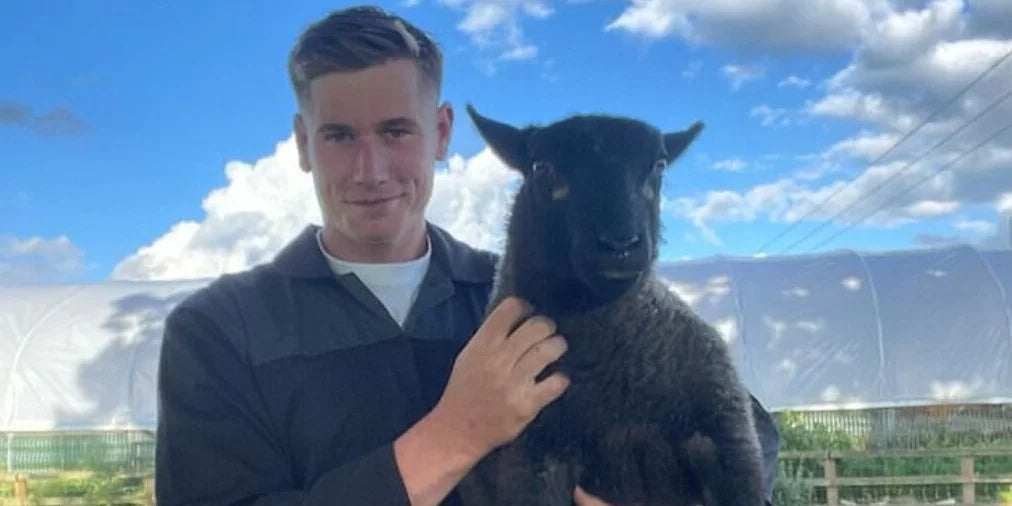
Dynamic, effective, and above all smart. As a recent Financial Times article also shows, the new generation of farmers is gaining hundreds of thousands of followers on social media. Twenty-three-year-old Will Young – also known as “Farmer Will” – has 900,000 on TikTok, Jessica West (Miss Farming) and Drew Steel (@dr3wmeister) have a similar audience. On these platforms, they daily share their workdays: from milking cows, to plowing fields, to shearing sheep. In the era of the “Great Resignation,” where more and more young people leave well-paid jobs seeking a more balanced life, the profession of farmer is becoming increasingly “cool.”
The drive that leads young people to invest in the land is authentic and deep. It’s a matter of dreams. Like Giovanni Messina, who continues his father’s project for better viticulture on the slopes of Etna, or Roberto Carbone, who chose to stay in Sicily rather than move north, launching a spice and herb business. A business must generate economic satisfaction, certainly, but above all a positive impact: this is why many young people are deciding to leave jobs they don’t love, even if well paid, to try to solve the problems of our society.
The Impact Revolution, as Ronald Cohen calls it in his book Impact. The Revolution Changing Capitalism. A new economic model that puts impact – environmental and social – at the center of business development. In Italy, a company structured this way is called a “Benefit Corporation” and is often run by young people. “The profit-with-purpose model,” writes Cohen, “is the hallmark of the millennial generation. It is a gentle but relentless revolution, as shown by the numbers of Benefit Corporations in Italy, which grew significantly during the pandemic period, and among these, Boniviri represents one of the most successful examples.”