

Publication date: June 2, 2021
One of the negative consequences linked to the industrialization of the agri-food sector is the elimination of all those species that are difficult to replicate in a linear model and not aligned with demand standards, resulting in a reduction of food biodiversity.
Today the market destroys biodiversity. The lack of commercial variety in agri-food products is a problem too often overlooked. In Italy, according to Coldiretti, there were 8,000 fruit varieties in the last century, while today there are just under 2,000, and of these, as many as 1,500 are considered at risk of disappearing due to modern commercial distribution systems that favor large quantities and standardization of supply.
Regarding the animal product industry, the data are equally striking: one in five animal breeds worldwide is at risk of extinction (there are fewer than 1,000 animals). Thanks to advances in animal husbandry, the agro-industrial sector has begun to focus only on certain commercial breeds with high milk yields and rapid growth times (often thanks to the use of antibiotics) to reduce the time needed to bring the product to market, maximizing profits.
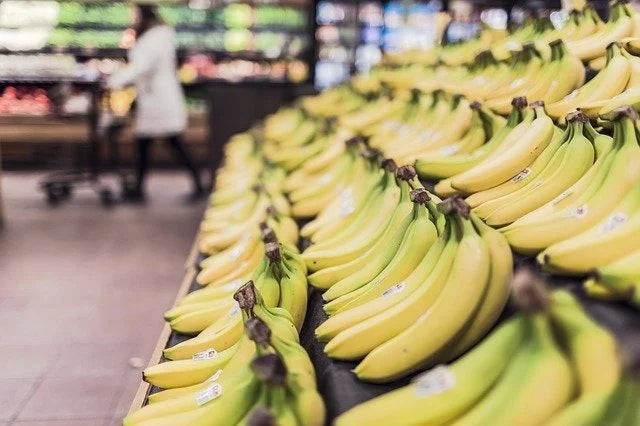
An example of how market logic can negatively affect biodiversity and, consequently, our diet is the banana, one of the most popular fruits worldwide. Of the more than 500 banana varieties, only one is found on the market (Cavendish), the only one that has managed to win over Western tastes because it is completely seedless. This has led to the conversion of all banana plantations in Asia, Australia, and South America into monocultures dedicated exclusively to this fruit variety. The fragility of this system becomes apparent when infectious pathogens attack monocultures, which is exactly what is happening to the Cavendish. A soil fungus known as tropical race 4 (TR4) has begun attacking plantations in all the main producing countries. If the infection cannot be stopped, the Cavendish risks extinction within a few decades, and currently, there is no species strong enough to replace it. The only way to save it is targeted intervention on the genome, which means that in the future we may only have genetically modified bananas.
To avoid ecological collapse, a transition from intensive agricultural systems to agroecological methods such as crop rotation, green fertilization, and the elimination of pesticides and fertilizers is necessary, both to restore natural soil cycles and to conserve resources and pollinators.
It is important to be aware that there is very little natural about what we eat. The agri-food varieties that end up on our table are actually the result of decades of artificial selection that has led to a system as efficient as it is fragile.
Problems like this must be addressed globally: a collective effort is needed to adopt measures capable of changing the current agro-industrial model, an ambitious project that places ecological transition, agroecology, and food biodiversity at its core.