

June 8, 2021
Today, 80% of the available fresh water is used in agriculture. When we reach 10 billion people by 2050, how will we produce food without harming the planet?
The increase in the world population and global warming are putting strong pressure on the food system and water resources.
According to an estimate by the World Health Organization, by 2025 half of the global population will live in areas affected by water stress, where the demand for usable water will exceed the available supply, threatening the survival of millions of people.
What if there was an infinite source of water that we could use for agriculture, thus increasing food production without further impacting planetary resources? According to many innovators, the solution to the water problem has always been there, at our disposal: seawater!
Seawater Greenhouses
The idea is to use what we have in abundance to produce what we need. Deserts, saltwater, and sunlight are therefore used to produce food, water, and clean energy.
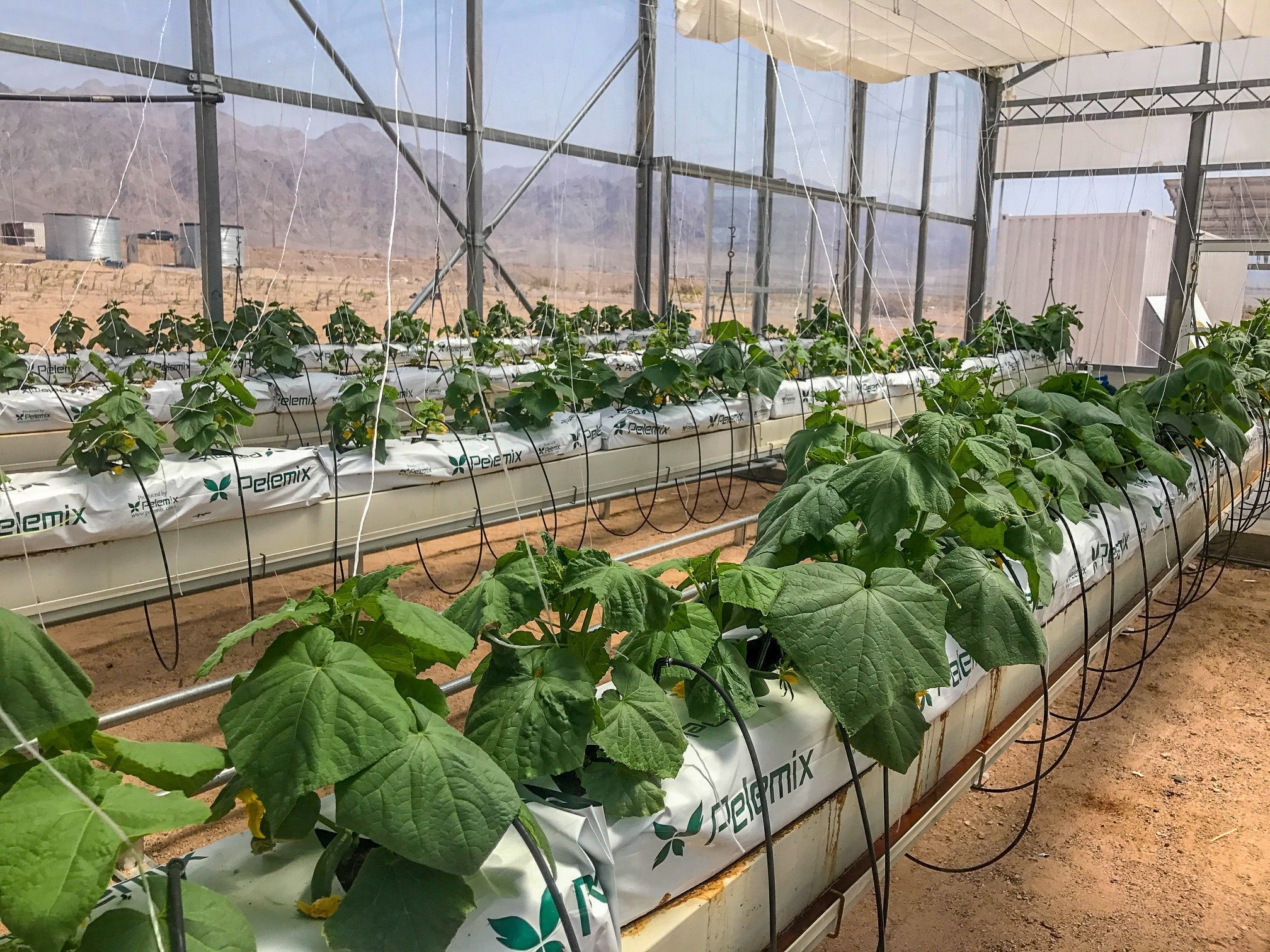
The seawater greenhouse, designed by British inventor Charlie Paton, is a facility where, through an innovative solar-powered desalination system, seawater, drawn directly from the sea, is used to cool and humidify the air, while the water vapor produced by solar heating is distilled to produce water.
This system allows the temperature inside the greenhouse to be up to 15°C lower than outside, recreating ideal conditions for growing various types of fruits and vegetables. Water needs are reduced by 90%, and if a larger amount is required, desalinated seawater is used.
Another particularly interesting aspect is that the residual water vapor creates an oasis effect even outside the greenhouse, making it possible to restore the surrounding areas. "We want to make the desert green," says Stake, head of the Sahara Forest Project. "The larger the areas we can green, the more carbon we store in the soil." In this way, the greenhouses can become a key element in an even more ambitious project aimed at reforesting entire desert areas, primarily the Sahara.
The Results Are Promising
In Port Augusta, in the South Australian desert, there is Sundrop Farms, a saltwater greenhouse that produces 17,000 tons of tomatoes per year, covering 13% of the Australian market. The facility is completely energy self-sufficient thanks to 23,000 solar panels, which allow it to produce the energy needed to desalinate seawater.
The advantages are numerous:
- Plants are grown on raised floors, making this cultivation possible practically anywhere
- No pesticides are needed (nothing harmful can enter the greenhouses)
- No fossil fuels are used (self-produced solar energy covers all needs)
- The only water used comes from Spencer Gulf or directly from the ocean
- Production is continuous: in the warmer months, desalinated water keeps the greenhouse cool, allowing tomato growth, while in colder months the structure is heated by solar rays
All these factors make cultivation in seawater greenhouses extremely resilient to all types of external conditions, avoiding various problems of today’s agri-food industry, foremost among them price volatility.
In the last ten years, seawater greenhouses have been built in Somalia, Jordan, Oman, Tenerife, and Abu Dhabi. All these areas are extremely arid and largely depend on imports of foreign agricultural products, often under unfavorable conditions. This type of innovation can represent the starting point of a path toward greater domestic production, which has always been limited due to scarce water resources and poor soil fertility.
Seawater greenhouses are one of the most effective tools at our disposal to prevent a global food crisis. Today, 80% of fresh water is used for agriculture, and with a population of 10 billion expected by 2050, urgent action is needed to reduce this consumption. The concept of arable land will necessarily have to expand to include deserts and the driest areas of the planet. These could become the key to a more sustainable and equitable food system.