

Publication date: June 11, 2021
A plant with a thousand beneficial properties, called “immortal” because of its flower heads, which can remain unchanged over time, even after being dried.
"You will be soaked in luck, whoever adorns themselves with everlasting flower"
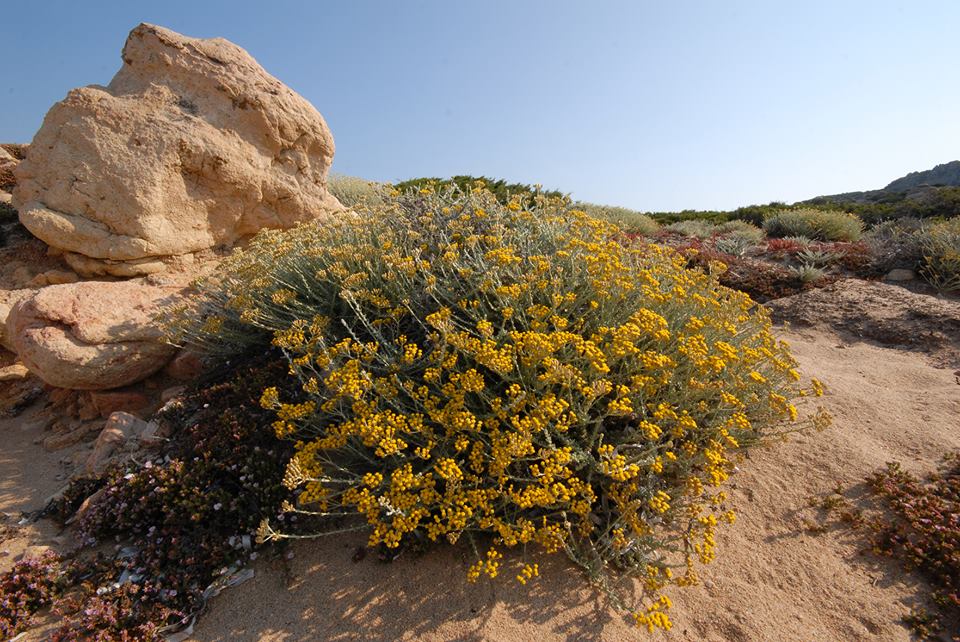
What a story, the everlasting flower. This unassuming shrub, no taller than 50 cm and with a bitter and sharp, almost unpleasant scent, hides curious surprises. Starting with its name, which legends attribute to the first nymph who picked it, Elicrisa. A beautiful nymph with golden hair, who loved a God without being loved back and for this reason, upon her death, was transformed by the Gods into an everlasting flower plant whose flowers today are lucky charms for lovers: “You will be soaked in luck, whoever adorns themselves with everlasting flower,” says a popular saying. It is also said that a bouquet of everlasting flower, left to dry all year and then burned on St. John’s night, allows one to win the love of the beloved.
The properties of this plant, widespread in Italy in dry areas, especially on the islands where it sometimes spreads enough to cover entire stretches of land, are as powerful as the stories it stars in. The everlasting flower is rich in components such as nerol and neryl acetate, tannin, waxes, and helichrysin, which bring numerous benefits to the body.
Called “breath herb” in some regions of Italy for its balsamic properties, it can be used as a natural remedy against bronchial cough and is recommended for people with diabetes for its diuretic and purifying action. Not only that, the everlasting flower is used in the production of ointments against sunburns, burns, and psoriasis and, in ophthalmology, as an emollient in cases of acute and chronic conjunctivitis.
Immortal like the love of the nymph Elicrisa, still preserved, intact, in its golden flowers today.